These revisions to the us constitution safeguard the liberti - GED Prep
Question
These revisions to the U.S. Constitution safeguard the liberties of individuals.
1868: 14th Amendment - Individuals born or naturalized in the United States, and subject to its laws, are deemed citizens of both the nation and the state in which they reside. No state is permitted to deny any person within its jurisdiction the equal protection of the laws.
1870: 15th Amendment - The right to vote of U.S. citizens shall not be restricted or curtailed by either the federal government or any state based on race, color, or prior servitude.
1964: 24th Amendment - The voting rights of U.S. citizens shall not be obstructed or limited by the federal government or any state due to non-payment of poll taxes or other levies.
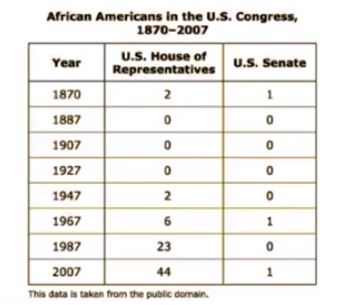
Considering the details provided in the passage, which pattern endured from the late 19th century into the 20th century?
Answers
-
correct
-
-
-
Explanation
The correct answer is A. This choice aligns with the evidence provided regarding the representation of African Americans in Congress. Despite the passage of civil rights amendments such as the 14th and 15th Amendments, which aimed to secure equal rights and voting protections for African Americans, racial discrimination persisted. The data presented indicates that even decades after the enactment of these amendments, the number of African Americans serving in Congress remained disproportionately low compared to their representation in the population. This disparity suggests ongoing challenges related to racial discrimination and unequal opportunities for African Americans in the political sphere, highlighting the persistence of racial inequities despite legislative efforts to address them.
No Payment Cards Needed
Normally $120
$69/month
Subjects Included
- English Languages Art ( RLA)
- Mathematics
- Social Studies
- Science
Additional Features
- 4 GED® Subjects with Lessons and Practice Tests
- Over 2000 Practice Questions
- Over 2000 Quizzes in all Lessons
- Access to Exact answered Questions with explanations
- Detailed Analysis of Questions with Answers and Explanations
- 24/7 Live chat support
- 24/7 WhatsApp support
- One Full Month Access