

AZ036 Pricing
Prepare for the AEPA Early Childhood Education AZ036 exam with targeted notes and practice questions covering child development, early learning strategies, literacy, mathematics, assessment, classroom management, and professional responsibilities. Build the knowledge and confidence needed to pass your exam and become an effective early childhood educator.
Standard
$49 /1 month
Subjects Included
- AEPA Early Childhood Education AZ036
Additional Features
- More than 300 + exact practice questions and Answers
- Detailed Notes with Chapters, Topics & Lessons
- Comprehensive study notes covering all topics
- Quizzes in every Lesson Provided
- Detailed Analysis of Questions with Answers and Explanations
- 24/7 Live chat support
- 24/7 WhatsApp support
- One Full Month Access
AEPA® Early Childhood Education (AZ036) Practice Test
The AEPA® Early Childhood Education (AZ036) exam is a customized Arizona educator certification test designed to measure whether candidates possess the knowledge and skills necessary to teach early childhood education effectively in Arizona public schools.
Developed by the Arizona Department of Education and administered by Pearson Education's Evaluation Systems group, this exam assesses your understanding of child development, communication and literacy, and learning across content areas.
Prepare for your AEPA® Early Childhood Education (AZ036) exam with our comprehensive practice test questions, expert study tips, and targeted resources designed to help you succeed.
At Prepsaret, we offer free practice tests, detailed study guides, and flashcards to help aspiring early childhood educators build confidence and master the essential knowledge required to support young children's development and learning.

AEPA® Early Childhood Education Exam Test Format and Structure
The AEPA® Early Childhood Education (AZ036) exam consists of 100 selected-response questions divided across three major subareas: Child Development and Learning; Communication, Language, and Literacy Development; and Learning in the Content Areas.
Basic Test Information
-
Test Name: AEPA® Early Childhood Education
- Test Code: AZ036
- Number of Questions: 100 selected-response questions
- Time Limit: 2.5 hours (150 minutes)
- Test Format: Computer-delivered (in-person and online proctored options available)
- Question Types: Selected-response (multiple-choice, true/false, matching)
- Testing Fee: $119
- Passing Score: 240 on a scaled score range of 100–300
- Test Administrator: Arizona Department of Education and Pearson Education
Time Allocation Recommendations:
- Child Development and Learning: 50 minutes (approximately 33 questions)
- Communication, Language, and Literacy Development: 50 minutes (approximately 27 questions)
- Learning in the Content Areas: 50 minutes (approximately 40 questions)
Test Format Details
The AEPA Early Childhood Education test is designed to assess entry-level educator competency for teaching young children in Arizona public schools.
The exam measures your understanding of how young children develop and learn across physical, cognitive, social, emotional, and language domains, as well as your ability to create supportive learning environments and facilitate meaningful educational experiences.
The test uses a computer-based delivery system with selected-response questions that can appear in multiple formats including traditional multiple-choice, true/false, and matching questions. No scheduled breaks are provided, but you may take restroom breaks as needed.
Your raw score (number of questions answered correctly) is converted to a scaled score ranging from 100 to 300, with a minimum passing score of 240. This conversion ensures fairness across different test administrations, as slightly different questions may appear on different test forms.
Scoring Information
All AEPA tests are scored using a scaled scoring system, with test results converted to a range from 100 to 300, with a scaled score of 240 representing the minimum passing score.
The passing score of 240 was established by the Arizona State Board of Education based on recommendations from committees of Arizona educators and reflects the level of knowledge and skills required for entry-level educators in Arizona public schools.
If your total test score is 240 or more, you have passed the test. If your total test score falls below 240, you have not passed the test. Score reports are released periodically and include diagnostic information about your performance on each subarea and individual test objective, which can help you identify specific areas for improvement if you need to retake the exam.
If you do not pass the exam, you may retake it after a mandatory 30-day waiting period. You will need to pay the exam fee the first two times you retake the exam. After you have taken the exam three times, your exam fee is waived for all additional retakes.
AEPA® Early Childhood Education Exam Content Outline
The AEPA Early Childhood Education exam assesses your knowledge across three interconnected subareas that reflect best practices in early childhood education.
The test emphasizes understanding of child development, communication and literacy skills, and your ability to facilitate learning across subject areas while creating inclusive, supportive learning environments.
I. Child Development and Learning (Approximately 33% of Test)
This subarea evaluates your understanding of how young children develop and learn across multiple domains and how to support their developmental progress.
The questions assess your knowledge of:
- Human Growth and Development Characteristics, processes, and progressions of typical and atypical cognitive, physical, motor, social, emotional, and language development; interconnections between developmental domains
- Factors Affecting Development and Learning Biological, social, emotional, cognitive, behavioral, physiological, gender, linguistic, environmental, familial, cultural, and economic factors that affect children's development; home environment influences; prior learning experiences; socioeconomic factors
- Creating Supportive Learning Environments Recognizing developmental characteristics and variations; designing learning opportunities appropriate for developmental levels; promoting developmental progress; supporting inclusive learning communities
- Integrated Curriculum Design Understanding the holistic nature of children's learning; benefits of integrated curriculum; using children's interests and experiences; constructing integrated learning experiences; integrating curriculum across subject areas

- Health and Safety: Recognizing behaviors and factors affecting individual, family, and community health and safety; demonstrating familiarity with nutrition principles; creating safe learning environments
II. Communication, Language, and Literacy Development (Approximately 27% of Test)
This subarea measures your understanding of how children develop communication, language, and literacy skills and your ability to promote these essential competencies.
The questions assess your knowledge of:
- Communication and Language Development Characteristics, processes, and progressions in receptive and expressive language; factors influencing development; methods for promoting communication and language; vocabulary development strategies; complex language development
- Second-Language Acquisition Characteristics and processes of second-language acquisition in young children; factors affecting English language learners; strategies for promoting English language development; respecting home languages; creating language-rich environments
- Emergent Literacy and Concepts About Print Development of concepts about print (interest in print, print meaning awareness, book handling, letter recognition); role of families in promoting literacy; print-rich environment creation; high-quality children's literature
- Foundations of Reading Development Phonological and phonemic awareness; phonics and word identification; orthographic awareness; vocabulary development; reading fluency; comprehension strategies and skills; facilitating comprehension before, during, and after reading

- Writing Development Characteristics, processes, and progressions of writing development; factors affecting writing skill development; strategies for promoting writing engagement; reciprocal relationships between writing and reading; spelling development stages
III. Learning in the Content Areas (Approximately 40% of Test)
This subarea assesses your knowledge of mathematics, science, social studies, and the arts as they relate to early childhood education and your ability to facilitate learning in these content areas.
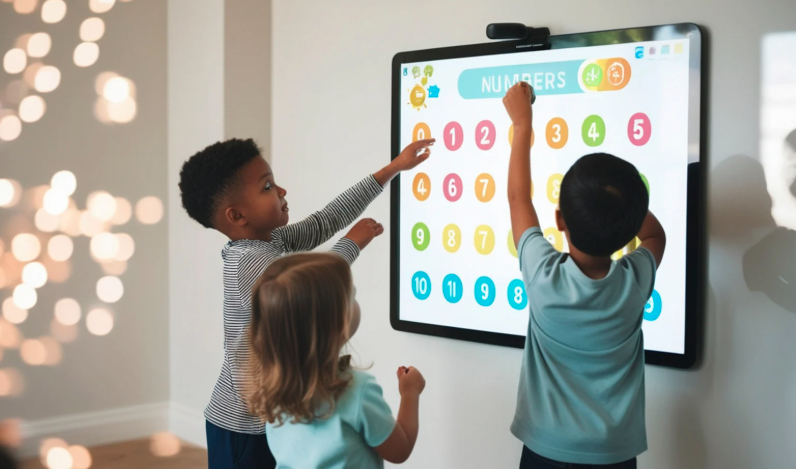
The questions assess your knowledge of:
- Mathematics Concepts and Learning Mathematical terminology, symbols, and representations; number sense and operations; patterns and relationships; measurement and data analysis; mathematical reasoning; promoting mathematical development; positive attitudes toward mathematics
- Science Content and Inquiry Basic concepts in physical, life, and earth science; scientific processes (observing, hypothesizing, experimenting); exploration and inquiry; learning experiences for promoting understanding; positive attitudes toward science; everyday application of science concepts
- Social Studies Content and Learning Basic concepts in geography, history, civics, and economics; social studies skills; exploration and inquiry; learning experiences promoting understanding; positive attitudes toward social studies; current events; social studies skills in everyday contexts
- Visual and Performing Arts Basic concepts and skills in visual arts, music, movement, and drama; exploration and inquiry in the arts; learning experiences promoting arts concepts; supporting creativity; aesthetic appreciation; arts as self-expression and understanding tools
Key Information About the AEPA Early Childhood Education Exam
About the AEPA Program
The Arizona Educator Proficiency Assessments (AEPA) are a series of exams developed by the Arizona Department of Education and administered by the Evaluation Systems group of Pearson. These exams are designed to determine whether an individual has the knowledge and skills necessary to be an entry-level educator in the Arizona public school system.
Test Availability
Online proctoring is available for the Early Childhood Education test assessment. You may test remotely, including from home. The test is also available for in-person testing at authorized test centers.
Computer-Based Testing
The exam is delivered via computer-based testing system, which provides immediate feedback on question selection and allows you to navigate through questions efficiently during the 2.5-hour testing window.
Free AEPA® Early Childhood Education Practice Test
Get started with our free AEPA® Early Childhood Education (AZ036) practice test to evaluate your readiness and identify areas for improvement. Our questions are designed to closely match the real exam, helping you build confidence and improve your performance under timed conditions.
Our practice test includes:
- 100 selected-response questions reflecting the actual test format
- Questions distributed across all three subareas (Child Development, Communication/Literacy, Content Areas)
- Realistic question types (multiple-choice, true/false, matching)
- Detailed explanations for each answer
- Performance breakdown by subarea
- Timed practice option to build speed and accuracy
- Scaled scoring aligned with the official exam
Additional Resources
- AEPA Study Guide: Comprehensive coverage of all test objectives with detailed explanations, examples, and practice questions organized by subarea.
- Flashcards: Reinforce key concepts, developmental milestones, terminology, and teaching strategies with interactive flashcards.
- Online Course: Access video lessons, interactive modules, and structured learning paths covering all three subareas and test objectives.
- Test Objectives Reference: Complete list of all 13 test objectives from the official AEPA study guide to guide your preparation.
- Official AEPA Study Guide: Download the official study guide from aepa.nesinc.com for additional practice questions and test information.
Why Choose Prepsaret?
At Prepsaret, we are committed to helping aspiring early childhood educators succeed. Our AEPA® Early Childhood Education prep resources are designed to:
- Clarify early childhood development concepts and theory
- Provide realistic practice questions with detailed explanations
- Connect theory to practical classroom application
- Improve time management for the 2.5-hour exam
- Build deep understanding across all three subareas
- Support inclusive teaching practices and diverse learner needs
- Build confidence through targeted practice and review
- Align with the official AEPA test objectives and Arizona learning standards
All study materials are developed by experienced early childhood educators and test-prep experts to ensure accuracy, relevance, and results aligned with Arizona education requirements.
Get Started Today
Strengthen your preparation with our expertly designed AEPA® Early Childhood Education (AZ036) resources. Start with a free practice test, explore our comprehensive study guides, and use flashcards to reinforce key concepts in child development, literacy, and content area instruction.
Start Preparing Now
AEPA and Arizona Educator Proficiency Assessments are trademarks of the Arizona Department of Education and Pearson Education, Inc. Prepsaret is not affiliated with or endorsed by these organizations.
Testimonials
What do our clients say?

I was nervous about taking AEPA 036 because I had heard the questions were difficult and very situational. Prepsaret really helped me get used to that format. I passed the exam and definitely recommend practicing those questions carefully instead of rushing through them.
John Hodges
Passed AEPA 036 last week! I mainly studied with Prepsaret and reviewed the practice questions every day for about two weeks. The classroom management and instructional strategy questions were very similar to what I saw on the exam.
Annie Simons
I used several study resources, but Prepsaret was the one that felt closest to the actual AEPA 036 exam. The questions made me think the same way the real test did. I passed and felt much more confident going into the exam because of the practice.
Jaime Smith
Honestly, Prepsaret helped me a lot with AEPA 036. The real test was tricky, but the practice tests prepared me for the wording and teaching scenarios. I focused mostly on the literacy and child development sections and ended up passing.
Misty Herman
FAQs About AZ036
The AEPA Early Childhood Education test is a customized Arizona educator certification exam designed to assess whether candidates possess the knowledge and skills necessary to teach young children effectively in Arizona public schools. The exam measures understanding of child development, communication and literacy, and learning across content areas.
There are 100 selected-response questions in total on the AEPA Early Childhood Education test.
The time limit for the test is 2.5 hours. There aren't any scheduled breaks, but you're free to take restroom breaks as needed.
You'll need to get a final score of at least 240 to pass the exam. Your final raw score will be converted to a scaled score ranging from 100 to 300.
The exam covers three major subareas:
- Child Development and Learning (approximately 33% of test)
- Communication, Language, and Literacy Development (approximately 27% of test)
- Learning in the Content Areas (approximately 40% of test)
Selected-response questions can appear in several different forms, including traditional multiple-choice, true/false, and matching questions where you select the correct answer from a list of options.
The examination fee is $119.
The AEPA Early Childhood Education test is scored using a scaled scoring method. For every question you answer correctly, you get one point added to your raw score. At the end of the test, your final raw score will be converted to a scaled score ranging from 100 to 300.
The reason your raw score is converted to a scaled score is because everyone that takes the test is given a slightly different set of questions. Since everyone has a different arrangement of questions, and because some questions are harder than others, converting your raw score to a scaled score ensures a more even playing field.
The Child Development and Learning subarea focuses on understanding how children grow and develop across domains and creating supportive environments. The Communication, Language, and Literacy Development subarea specifically assesses knowledge of language development, second-language acquisition, and literacy foundations including reading and writing development.
The exam assesses your understanding of second-language acquisition processes, strategies for promoting English language development, and the importance of respecting home languages. You should be familiar with characteristics of different stages of language development and practical strategies for supporting diverse learners.
Study typical developmental progressions across physical, cognitive, social, emotional, and language domains for children birth through age eight. Understand how development in one domain affects other domains, and recognize variations and atypical development patterns.
Online proctoring is available for this assessment. You may test remotely, including from home.
If you don't get the score you want on your first try, that's okay! You can take the exam again after a mandatory 30-day waiting period. You will need to pay the exam fee the first two times you retake the exam. After you have taken the exam three times, your exam fee is waived for all additional retakes.
Score reports are released periodically throughout the year. You will receive a diagnostic score report that breaks down your performance on each subarea and individual test objective, helping you identify strengths and areas for improvement.
- Child Development and Learning – Understanding growth and development across domains, factors affecting learning, creating supportive environments, integrated curriculum, health/safety
- Communication, Language, and Literacy – Language and communication development, second-language acquisition, emergent literacy, reading foundations, writing development
- Learning in Content Areas – Mathematics, science, social studies, and visual/performing arts instruction for young children
The test objectives include recognizing the role of play in children's development. You should understand how play supports development across domains and how to facilitate play-based learning experiences.
Study how to design learning experiences that integrate literacy, mathematics, science, social studies, and the arts. Understand how to use children's interests and experiences to create meaningful, connected learning opportunities rather than teaching subjects in isolation.
Prepsaret provides free practice tests, detailed study guides, interactive flashcards, and online courses specifically designed for the AEPA Early Childhood Education (AZ036) exam. All resources are aligned with the official AEPA test objectives and reflect current best practices in early childhood education.
Related Courses
Discover a range of courses designed to provide you with the knowledge and skills needed to excel in your chosen field.
220-1201 - CompTIA A+ Exam Core 1
Start Course Prep
220-1202 - CompTIA A+ Exam Core 2
Start Course Prep
AEPA FIELD 93: Professional Knowledge—Early Childhood
Start Course Prep
Alabama Real Estate Exam Prep
Start Course Prep
Alabama Real Estate Exam Prep
Start Course Prep