


Deciding to leave school early is a serious choice that affects your future in many ways. If you’re wondering what age can you dropout of school with parental consent, you’re not alone. Many students and parents search for answers about the legal dropout age by state and what steps they need to take.
Understanding the minimum age to leave school in your state is crucial before making this decision. Each state has different laws about compulsory education, and knowing how to drop out of school legally can help you avoid legal trouble. Some states allow students to leave at 16 with permission, while others require you to stay until 18.
The good news? Even if you leave school early, you have options to complete your education. Programs like the HiSET exam give you a chance to earn a high school equivalency credential. If you’re preparing for your HiSET exam, Prepsaret offers comprehensive study materials to help you succeed!
Legal High School Dropout Age by State

The legal dropout age by state varies across America because each state sets its own education requirements. Before we dive into specific ages, let’s understand what compulsory education means and how it affects you.
Compulsory Education Age Requirements
Compulsory education age requirements refer to the ages during which students must attend school by law. Most states require students to attend school from ages 5 or 6 until they reach 16, 17, or 18 years old.
These compulsory attendance laws exist to ensure young people receive basic education before entering the workforce.
What Is Parental Consent for School Withdrawal?
Parental consent for school withdrawal means your parent or legal guardian must give written permission for you to leave school before reaching the state’s mandatory attendance age. Without this consent, leaving school could result in truancy charges against both you and your parents.
Here’s what you need to know about school withdrawal laws:
- Parents must sign official forms provided by the school district
- Some states require additional steps, like meeting with school counselors
- The withdrawal process must follow your state’s specific procedures
- Underage school dropout rules often include conditions beyond just parental permission
When researching dropout age with parental consent, you’ll encounter several important terms:
- Compulsory attendance age: The age until which you must attend school
- Legal withdrawal age: The earliest age you can leave with proper authorization
- Parental permission requirements: What documentation your parents must provide
- Truancy: Unauthorized absence from school before reaching the legal dropout age
Remember, underage school dropout rules exist to protect young people. These laws recognize that education significantly impacts your earning potential and life opportunities.
That’s why understanding compulsory education age requirements in your specific state is your first step toward making an informed decision.
Check Out: HiSET Eligibility Requirements
State-by-State Dropout Age Requirements with Parental Permission
What states allow you to drop out at 16 with parental consent? The answer depends on where you live, as state-by-state dropout age requirements with parental permission vary significantly.
States That Allow Dropout at Age 16
Several states permit students to leave school at 16 with parental consent. However, can you legally drop out of school at 17 with a parent’s permission is actually the more common scenario. Here are dropping out before 18 laws explained:
States with age 16 dropout laws (with parental consent):
Can you legally drop out of school at 17 with a parent’s permission? Yes, some states allow it. Here’s a breakdown:
- Alabama: Students can withdraw at 16 with parental permission
- Arkansas: Age 16 with parental consent or completion of GED program
- Florida: Age 16 with parental consent and completion of specific forms
- Georgia: Age 16 with parental consent after meeting with school officials
- Indiana: Age 16 with parental consent and exit interview
- Kentucky: Age 16 with parental consent and documented reason
- Mississippi: Age 17 with parental consent
- South Carolina: Age 17 with parental consent
States requiring attendance until age 17:
- California: Must attend until 18, but some exceptions exist
- Colorado: Must attend until 17
- Louisiana: Must attend until 18
- Maryland: Must attend until 18
- Michigan: Must attend until 18
- New Mexico: Must attend until 18
- Ohio: Must attend until 18
- Texas: Must attend until 19 or graduation
Is It Legal to Stop Going to School Before 18 with a Parent’s Signature?
Yes, but only in states where the compulsory attendance age is lower than 18. Even then, additional requirements often apply beyond just getting your parent’s signature.
For example, many states require:
- Completion of a formal withdrawal process
- Meeting with school administrators or counselors
- Proving employment or enrollment in alternative education
- Signed acknowledgment of consequences from parents
What age can you drop out of school with parental consent in your state?
Consider these factors:
Age 16 permissions often include conditions such as:
- Full-time employment verification
- Enrollment in GED or vocational programs
- Documented hardship situations
- Completion of specific grade levels
Age 17 permissions may require:
- Parental attendance at school meetings
- Signed statements acknowledging educational impacts
- Alternative education enrollment plans
- Regular check-ins with school officials
Remember, answering can you legally drop out of school at 17 with a parent’s permission depends entirely on your state’s specific laws. Some states have strict requirements, while others offer more flexibility when parents are involved in the decision.
Find Out: How to Drop out of High-School Stress-Free
How to Drop Out of School Legally: A Step-by-Step Guide
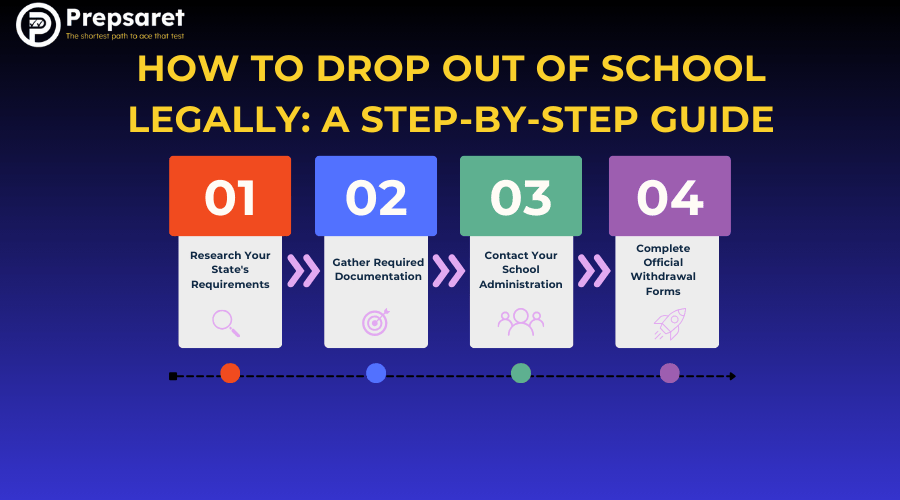
If you’ve decided that leaving school is your best option, understanding how to drop out of school legally is essential. This process protects you from truancy charges and ensures you’re following state regulations properly.
The Legal Withdrawal Process
How to withdraw a teenager from school legally involves several important steps. Here’s a clear guide to help parents and students navigate this process:
Step 1: Research Your State’s Requirements
- Check your state’s compulsory attendance age
- Understand what age can you dropout of school with parental consent in your location
- Review any additional conditions beyond age requirements
Step 2: Gather Required Documentation
- Parent or guardian identification
- Student’s birth certificate or proof of age
- School enrollment records
- Any special forms required by your state or district
Step 3: Contact Your School Administration
- Schedule a meeting with your school counselor or principal
- Discuss the withdrawal process and required paperwork
Step 4: Complete Official Withdrawal Forms
Most districts require:
- Signed withdrawal request from parent or guardian
- Statement of reason for withdrawal
- Acknowledgment of educational consequences
- Agreement to assume responsibility for student’s education
How to Drop Out of High School at 16 with Parental Consent
Before the withdrawal:
- Your parent must verify you meet the minimum age requirement
- Schedule a mandatory meeting with school officials
- Discuss alternative education options
- Review employment or training plans
During the withdrawal process:
- Both student and parent attend the school meeting
- Sign all required documentation together
- Receive copies of all completed forms
- Get information about re-enrollment options if needed
After withdrawal:
- Understand your rights regarding school records
- Keep copies of all withdrawal documentation
- Explore GED or HiSET preparation programs
Can You Leave School Early if Your Parents Agree?
Yes, in most states, but ask these questions first:
- What are the specific age requirements in my state?
- Are there any exceptions that might apply to my situation?
- What documentation will I need to provide?
- How long does the withdrawal process take?
- Can I re-enroll if circumstances change?
When learning how to drop out of school legally, avoid these errors:
- Simply stopping attendance without formal withdrawal
- Failing to complete required paperwork
- Missing mandatory meetings with school officials
- Not keeping copies of withdrawal documents
- Ignoring alternative education requirements
Remember, understanding how to withdraw a teenager from school legally protects both students and parents from legal consequences. Take time to complete each step properly and maintain documentation of the entire process.
Find Out: How to write a school withdrawal letter
Consequences of Dropping Out of High School
Leaving school early can have a significant impact on a student’s future. If you’re considering dropping out of School with parental consent, it’s important to understand the legal, academic, and social consequences before making any decisions.
Legal Implications
Even with parental consent, dropping out can affect your legal status:
- States may require minors to remain in some form of educational program until reaching a certain age.
- Schools may request documentation to ensure compliance with truancy laws and compulsory attendance laws.
- Failing to follow proper withdrawal procedures can result in penalties for both students and parents.
Academic Implications
Leaving school before graduation limits traditional academic opportunities:
- Students miss out on core curriculum needed for college or vocational programs.
- High school completion options like online diplomas or GED programs can help fill this gap.
- Academic records may show early withdrawal, which could affect college admissions.
Social and Career Implications
Dropping out may also influence future career and social opportunities:
- Employment options are often limited without a high school diploma.
- Students may face challenges in skill development and professional networking.
- Social interactions in school environments, such as extracurricular activities, are reduced.
Find Out: What Jobs are Available with a GED?
Alternatives and Solutions
Even after dropping out, there are ways to continue education and improve career prospects:
- GED vs. dropping out: Obtaining a GED can provide equivalent credentials to a high school diploma.
- Free online high school diploma programs offer flexible learning opportunities for adults and teens.
- Online high school diploma for adults allows you to study at your own pace.
Understanding the consequences of leaving school early helps families make informed decisions while considering alternatives. Proper planning ensures that students maintain access to future opportunities, even if they leave traditional high school early.
How Can I Get my High School Diploma Online for Free for Adults?

Several options exist:
Free online high school diploma programs:
- State-sponsored virtual schools (available in many states)
- Nonprofit education organizations
- Community college partnership programs
- Public library-sponsored learning centers
Online high school diploma for adults:
- Flexible scheduling around work and family
- Self-paced learning options
- Accredited programs recognized nationwide
- Support services for adult learners
These free online high school diploma programs make it possible to complete your education even after leaving traditional school. The key is finding accredited online high school diploma programs that meet your needs and schedule.
Alternative High School Completion Options
If you’ve decided to leave school early, it’s reassuring to know there are multiple ways to continue your education.
Online High School Diploma Programs
Online programs provide flexibility for teens and adults who need to balance education with other responsibilities:
- Best online high school diploma programs offer accredited courses and support from certified instructors.
- Accredited online high school diploma programs ensure that your diploma is recognized by colleges, employers, and government institutions.
- For those looking for a quicker path, fast high school diploma 7 days programs allow completion of coursework in a highly accelerated format.
- Cheap online high school diploma for adults options make education affordable without compromising quality.
- Best online high school diploma for adults combine affordability, accreditation, and flexible schedules.
Free and Accessible Options
- Free online high school diploma programs allow students to study without financial burden.
- Online high school diploma for adults ensures that those who left traditional school can return to complete their education.
Homeschooling as an Alternative
Homeschooling is another excellent option for students leaving school with parental consent:
- Parents can provide structured learning tailored to a student’s pace and interests.
- Homeschooling programs often offer flexibility to pursue online courses, GED prep, or vocational training alongside traditional curriculum.
By exploring these alternatives, students can continue their education responsibly and maintain future opportunities for college, careers, and personal growth. These programs make it clear that leaving school early doesn’t mean giving up on your education.
Check Out: Is HiSET harder than GED?
Legal Loopholes, Attendance Exemptions, and Teen Rights
Understanding truancy laws and school attendance exemptions is crucial when considering leaving school early. While most states enforce compulsory attendance strictly, certain circumstances may provide legal alternatives.
Truancy Laws
- Truancy laws ensure that students attend school until the official withdrawal process is completed.
- Even with parental consent, failing to follow the proper steps can result in legal complications for both students and parents.
- Understanding truancy laws helps families avoid fines or penalties while planning for early withdrawal.
School Attendance Exemptions
- Some states provide school attendance exemptions for students leaving school early with parental approval.
- These exemptions may include enrollment in vocational training, online education, or homeschooling programs.
- Students should consult with their school district to ensure that exemptions are properly documented.
Education Requirements for Minors
- Education requirements for minors ensure that all students, even those leaving traditional school early, meet minimum learning standards.
- Parents are responsible for ensuring that withdrawn students continue to pursue educational goals through alternative programs.
Teen Education Rights
- Teenagers have the right to a safe, supportive, and flexible learning environment.
- Teen education rights include access to alternative education programs, GED preparation, and online diplomas.
Leaving School Early Legally
- Students can leave school early if all legal steps are followed and parental consent is obtained.
- Knowing how to leave school early legally helps students maintain educational continuity and prevents complications with state laws.
By understanding truancy laws, school attendance exemptions, and teen rights, families can navigate early withdrawal responsibly. This ensures that students are not only complying with the law but also continuing their educational journey successfully.
Continue Reading: Can You Go to College Without a High School Diploma or GED
What Age Can You Dropout of School With Parental Consent: FAQs
Is There A Way To Get Your High School Diploma If You Lost It?
Yes, you can request a replacement diploma from the high school you attended. Most schools keep records and issue duplicates for a fee. Alternatively, you can earn a high school equivalency diploma like the GED or HiSET if the original diploma is lost.
How Long Does It Take To Get An Online High School Diploma?
The time varies but typically ranges from several months to two years depending on the program structure and course load. Some self-paced programs allow faster completion, while others have set semesters like traditional schools.
What Is The Oldest You Can Get A High School Diploma?
There is no maximum age to earn a high school diploma. Adult learners of any age can obtain a diploma through traditional, online, or equivalency programs like GED or HiSET.
Do Jobs Check If Your Diploma Is Real?
Yes, many employers verify diplomas during background checks, especially for positions requiring a high school education. Diplomas from accredited schools are usually accepted, while diplomas from non-accredited or diploma mills may raise concerns.
Is A Homeschool High School Diploma Valid?
A homeschool diploma is valid if it meets state educational requirements and follows proper documentation and record-keeping. Acceptance varies by employer and college, so additional transcripts or portfolios may be requested.
Does A Diploma Look Better Than A GED?
A traditional high school diploma often carries more weight in college admissions and some jobs, but a GED is widely accepted as an equivalent credential. Both can open doors, but a diploma may be preferable for certain opportunities.
Conclusion
While leaving school early is possible with parental approval, it’s important to consider legal requirements, academic consequences, and alternative education paths. Programs like high school completion options, GED, and best online high school diploma for adults provide flexible ways to continue learning and achieve future goals. For students preparing for high school equivalency exams, Prepsaret offers comprehensive HiSET study materials to ensure success and keep your educational journey on track.