
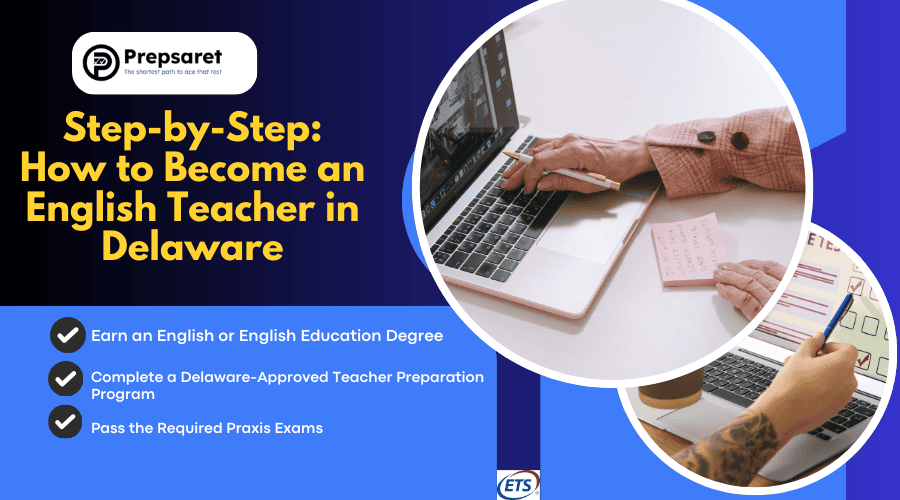
Are you passionate about literature, writing, and helping students develop critical thinking skills? If you’re wondering how to become an English teacher in Colorado, you’re embarking on a rewarding career path that shapes young minds and fosters a lifelong love of language. Colorado offers multiple pathways to English teacher certification, whether you’re a recent college graduate, a career changer, or an out-of-state educator looking to transfer your license.
Let’s walk you through every step of the process, from educational requirements to Praxis exams, student teaching, and securing your Colorado teaching license.
As an aspiring educator, understanding how to navigate the certification process is crucial. Whether you wish to teach elementary, middle, or high school students, this comprehensive guide will outline everything you need to know to successfully embark on your teaching career.
Why Teach English in Colorado?
Colorado’s education system values qualified, passionate educators who can inspire students across diverse communities—from urban centers like Denver and Colorado Springs to rural mountain towns. English teachers play a crucial role in developing students’ reading comprehension, writing abilities, critical analysis skills, and communication competencies that serve them throughout life.
The state offers competitive salaries, professional development opportunities, and a supportive education community. Whether you aspire to become a middle school English teacher or a secondary English teacher in Colorado high schools, understanding the certification requirements is your first step toward this fulfilling career.
Understanding Colorado Teacher Licensure Requirements
The Colorado Department of Education (CDE) oversees all teacher certification and licensure in the state. To teach English in Colorado public schools, you must obtain an initial teacher license with an English Language Arts endorsement. Colorado requires all prospective teachers to meet specific educational, examination, and practical experience standards.
Basic Eligibility Requirements
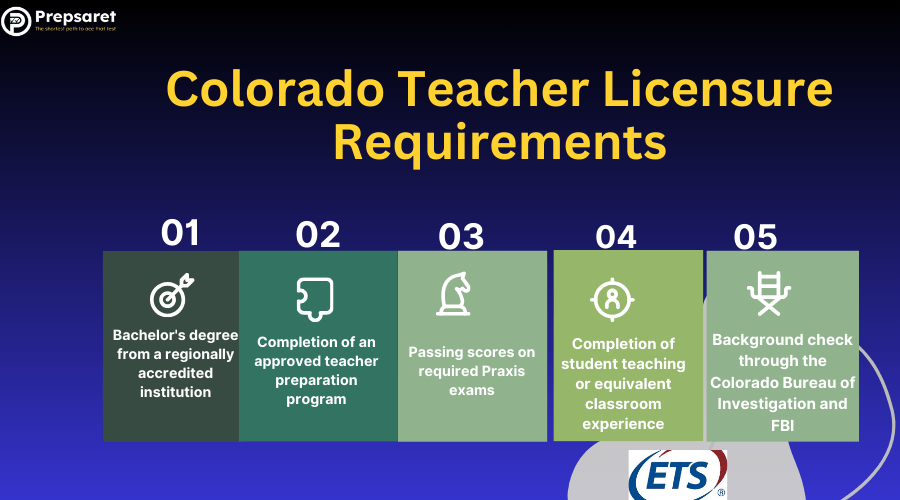
Before pursuing English teacher certification in Colorado, ensure you meet these fundamental requirements:
- Bachelor’s degree from a regionally accredited institution
- Completion of an approved teacher preparation program (traditional or alternative pathway)
- Passing scores on required Praxis exams
- Completion of student teaching or equivalent classroom experience
- Background check through the Colorado Bureau of Investigation and FBI
- Demonstration of content knowledge in English Language Arts
The Colorado teaching license for English specifically requires you to demonstrate proficiency in literature, composition, language study, and reading instruction appropriate for the grade levels you wish to teach.
Traditional Pathway: Teacher Preparation Programs
The most common route for aspiring educators is completing a teacher preparation program at a Colorado college or university. These programs combine academic coursework with hands-on classroom experience, preparing you comprehensively for the demands of teaching.
Selecting an Accredited Program
Colorado offers numerous accredited teacher preparation programs specifically designed for English education. When choosing a program, consider:
- Accreditation status: Ensure the program is approved by the Colorado Department of Education
- Grade-level focus: Some programs specialize in secondary education (grades 7-12), while others cover middle grades
- Program format: Traditional four-year undergraduate programs, post-baccalaureate programs, or graduate-level MAT (Master of Arts in Teaching) programs
- Clinical experience opportunities: Quality programs provide extensive student teaching placements in diverse school settings
- Support services: Look for programs offering Praxis preparation, job placement assistance, and mentorship
Major Colorado universities offering English education programs include the University of Colorado system, Colorado State University, University of Northern Colorado, University of Denver, and Metropolitan State University of Denver.
Coursework Requirements
Your teacher preparation program will include both education-focused courses and English content area courses. Expect to complete coursework in:
Education Foundation Courses:
- Educational psychology and child/adolescent development
- Curriculum design and instructional methods
- Classroom management and student engagement
- Assessment and evaluation techniques
- Special education and inclusive classroom practices
- Educational technology integration
- Cultural competency and teaching diverse learners
English Content Area Courses:
- American literature, British literature, and world literature
- Literary analysis and critical theory
- Composition and rhetoric
- Grammar, linguistics, and language development
- Young adult literature (for secondary teachers)
- Writing instruction methodologies
- Reading comprehension strategies
- Poetry, drama, fiction, and non-fiction genres
These courses ensure you develop both pedagogical expertise and deep content knowledge in English Language Arts.
Related post: Praxis Requirements in Colorado
Student Teaching Requirements
Student teaching represents the culminating experience of your teacher preparation program. The Colorado Department of Education requires prospective teachers to complete supervised clinical practice in actual classroom settings.
Student Teaching Expectations:
- Duration: Typically one full semester (approximately 14-16 weeks)
- Placement: You’ll be assigned to a cooperating teacher in a Colorado school district
- Responsibilities: Gradually assume full teaching responsibilities, including lesson planning, instruction delivery, assessment, and classroom management
- Supervision: Regular observations and feedback from both your university supervisor and cooperating teacher
- Grade levels: Experience teaching across the grade range of your intended license (usually grades 7-12 for secondary English)
During student teaching, you’ll apply theoretical knowledge to real-world teaching situations, develop your instructional style, and build confidence in managing a classroom. This experience is invaluable for your professional development and is carefully evaluated as part of your program completion.
Alternative Pathway: Alternative Teacher Certification in Colorado
Not everyone follows the traditional college-to-teaching route. Colorado recognizes that talented professionals from diverse backgrounds can become excellent teachers through alternative certification pathways. Alternative teacher certification in Colorado allows career changers, subject-matter experts, and those with bachelor’s degrees in fields other than education to pursue teaching careers.
Alternative License Program (ALP)
The Alternative License Program is Colorado’s primary alternative certification route. This pathway allows you to begin teaching while completing your licensure requirements.
ALP Requirements:
- Bachelor’s degree from a regionally accredited institution (in any field)
- Pass required Praxis exams demonstrating content knowledge in English
- Secure employment with a Colorado school district willing to sponsor your alternative license
- Complete an individualized alternative licensure plan (IALP) under district supervision
- Participate in ongoing professional development and mentorship
- Complete all licensure requirements within three years
The ALP pathway is particularly attractive if you already have strong content knowledge in English but lack formal teacher training. You’ll learn pedagogy on the job while earning a salary, though this pathway demands dedication to both teaching responsibilities and completing certification requirements simultaneously.
Teacher in Residence Programs
Some Colorado districts and organizations offer Teacher in Residence programs, which provide intensive training before you begin teaching. These programs typically include:
- Summer intensive training in instructional methods and classroom management
- Ongoing support and coaching throughout your first teaching year
- Cohort-based learning with other alternative certification candidates
- Structured pathway to completing all licensure requirements
Programs like Teach for America, Denver Teacher Residency, and district-specific initiatives may offer these opportunities for aspiring English teachers.
Related post: How to Become a Math Teacher in Colorado
Praxis Exam Requirements for English Teachers
Colorado requires prospective teachers to pass specific Praxis exams to demonstrate content knowledge and teaching competency. For English teacher certification in Colorado, you’ll need to pass the appropriate Praxis English exam(s) based on your intended grade levels.
Required Praxis Exams
For Secondary English Teachers (Grades 7-12):
The primary exam is Praxis II English Language Arts: Content Knowledge (5038). This comprehensive assessment evaluates your understanding of:
- Reading and understanding texts
- Language use and vocabulary
- Writing, speaking, and listening
Test Format:
- 130 selected-response questions (multiple choice)
- 150 minutes (2.5 hours) testing time
- Score scale: 100-200
- Colorado passing score: Verify current requirements with CDE, as passing scores can change
Content Categories:
- Reading and Understanding Texts (55-60% of exam)
- Comprehending and analyzing literary texts across genres (fiction, poetry, drama)
- Comprehending and analyzing informational texts
- Understanding literature from diverse traditions and historical periods
- Applying literary theories and critical lenses
- Recognizing rhetorical strategies and argumentative structures
- Language Use and Vocabulary (20-25% of exam)
- Understanding grammar, syntax, and conventions of Standard English
- Analyzing language development and acquisition
- Understanding semantics, etymology, and vocabulary development
- Recognizing dialect variations and language diversity
- Understanding the relationship between language and identity
- Writing, Speaking, and Listening (15-20% of exam)
- Understanding the writing process and composition strategies
- Recognizing characteristics of effective writing across modes
- Understanding research skills and information literacy
- Knowing principles of oral communication and presentation
- Understanding collaborative learning and discussion facilitation
Additional Praxis Requirements
Depending on when Colorado updates its requirements, you may also need to complete:
- Praxis Core Academic Skills for Educators: Basic skills assessment in reading, writing, and mathematics (sometimes required if your undergraduate GPA was below a certain threshold)
- Praxis Principles of Learning and Teaching (PLT): Pedagogy-focused exam covering instructional strategies, assessment, classroom management, and professional responsibilities (requirement varies by pathway)
Always verify current Praxis requirements directly with the Colorado Department of Education or your teacher preparation program, as testing requirements can be updated.
Registering for the Praxis Exam
Register for Praxis exams through the official ETS Praxis website. Key steps include:
- Create an ETS account
- Select your specific test(s) and testing date
- Choose a testing location (computer-delivered tests available at Prometric centers throughout Colorado)
- Pay the testing fee (typically $120-$150 per exam)
- Receive your admission ticket
Timing Recommendations:
- Schedule your exam at least 2-3 months before you need your scores
- Allow adequate preparation time (typically 6-12 weeks of focused study)
- Consider testing during less stressful periods (not during heavy coursework or student teaching)
- Check CDE deadlines if you need scores by a specific date for license application
Preparing for the Praxis English Exam
Success on the Praxis English Language Arts exam requires both comprehensive content knowledge and strategic test-taking skills. Here’s how to prepare effectively:
Understanding the Exam Content
The Praxis English exam is rigorous and covers a broad range of literary and linguistic content. You’ll need familiarity with:
Literary Knowledge:
- Major works and authors from American, British, and world literature
- Literary movements and historical periods (Medieval, Renaissance, Romanticism, Modernism, Contemporary, etc.)
- Various genres: poetry, drama, fiction, creative non-fiction, memoir
- Literary devices, figurative language, and poetic forms
- Young adult literature appropriate for secondary students
Language and Linguistics:
- Parts of speech and sentence structures
- Grammar rules and conventions
- Syntax, morphology, and phonology basics
- Language acquisition theories
- Etymology and word origins
- Dialect and language variation
Composition and Rhetoric:
- Writing process stages (prewriting, drafting, revising, editing, publishing)
- Rhetorical modes (narrative, expository, argumentative, descriptive)
- Rhetorical appeals (ethos, pathos, logos)
- Research methodologies and citation practices
- Peer review and collaborative writing
- Writing assessment and feedback strategies
Effective Study Strategies
1. Start with a Diagnostic Assessment
Begin your preparation by taking a practice test to identify your strengths and weaknesses. Prepsaret offers Praxis-specific practice tests that simulate the actual exam experience. A diagnostic test helps you:
- Understand the question formats and difficulty level
- Identify content areas needing more attention
- Develop a realistic timeline for preparation
- Build confidence through familiarity with the test structure
2. Create a Structured Study Plan
Dedicate 6-12 weeks to focused preparation, depending on your current knowledge base. A sample study schedule might include:
- Weeks 1-2: Review all content categories; take diagnostic practice test
- Weeks 3-6: Deep dive into weak areas; read literary works you’re unfamiliar with
- Weeks 7-9: Complete targeted practice questions by content category
- Weeks 10-11: Take full-length practice tests under timed conditions
- Week 12: Final review of challenging concepts; test-day logistics preparation
Consistency matters more than marathon study sessions. Aim for 1-2 hours daily rather than sporadic longer sessions.
3. Use Quality Study Materials
Invest in comprehensive preparation resources:
- Official Praxis Study Companions: Free resources from ETS providing test overviews and sample questions
- Comprehensive study guides: Look for materials specifically addressing Praxis 5038
- Literature anthologies: Review major works and authors across periods and traditions
- Grammar and composition handbooks: Refresh your understanding of language conventions
- Practice tests: Essential for building stamina and familiarity (available at Prepsaret)
4. Expand Your Literary Knowledge
You cannot memorize every literary work, but you should have broad familiarity across:
- Poetry: Read and analyze poems from different eras and styles (sonnets, free verse, narrative poetry, etc.)
- Drama: Review major plays (Shakespeare, Greek tragedies, modern drama)
- Fiction: Familiarize yourself with canonical novels and short stories
- Literary criticism: Understand major critical approaches (formalism, feminism, post-colonialism, reader-response, etc.)
Create summary notes for major works including plot, themes, literary devices, and historical context.
5. Practice Analyzing Passages
The exam frequently presents literary passages and asks analytical questions. Practice:
- Identifying tone, mood, and theme
- Recognizing literary devices and figurative language
- Understanding characterization techniques
- Analyzing narrative perspective and structure
- Interpreting symbolism and imagery
- Recognizing rhetorical strategies in non-fiction texts
Read actively, annotating passages and asking analytical questions as you read.
6. Master Grammar and Language Conventions
Grammar questions assess your command of Standard English. Review:
- Subject-verb agreement, pronoun-antecedent agreement
- Verb tenses and consistency
- Sentence fragments, run-ons, and comma splices
- Proper punctuation usage
- Commonly confused words and usage issues
- Sentence variety and parallel structure
Complete grammar exercises and explanations to reinforce understanding, not just memorization.
7. Understand Writing Instruction Principles
Questions about teaching writing require knowledge of:
- The writing process and its stages
- Effective feedback strategies
- Scaffolding writing instruction
- Genre-specific writing instruction
- Grammar instruction in context
- Assessment rubrics and criteria
- Supporting struggling writers
Think pedagogically about how you would teach these concepts, not just your own writing ability.
8. Take Regular Practice Tests
Practice tests are crucial for success. They help you:
- Build test-taking endurance (150 minutes is mentally demanding)
- Identify remaining knowledge gaps
- Improve time management
- Reduce test anxiety through familiarity
- Refine your guessing strategies for challenging questions
Take at least 3-4 full-length practice tests under timed conditions. Review not just incorrect answers but also questions you answered correctly but uncertainly.
Test-Taking Strategies
During the Exam:
- Read questions carefully: Identify what’s specifically being asked before reviewing answer choices
- Eliminate obviously incorrect answers: Narrow your options to increase chances of selecting correctly
- Watch your time: You have approximately 69 seconds per question; don’t get stuck on any single item
- Trust your preparation: Your first instinct is often correct; only change answers if you have a strong reason
- Use the review function: Mark challenging questions to revisit if time permits
- Answer every question: There’s no penalty for guessing; never leave items blank
Managing Test Anxiety:
- Practice relaxation breathing techniques
- Maintain perspective: the Praxis is passable with solid preparation
- Get adequate sleep before test day
- Arrive early to the testing center to avoid rushed feelings
- Bring approved materials (ID, confirmation, nothing else unless specified)
Related post: How to Become a Teacher in Colorado Without a Teaching Degree
Completing Your Colorado Teaching License Application
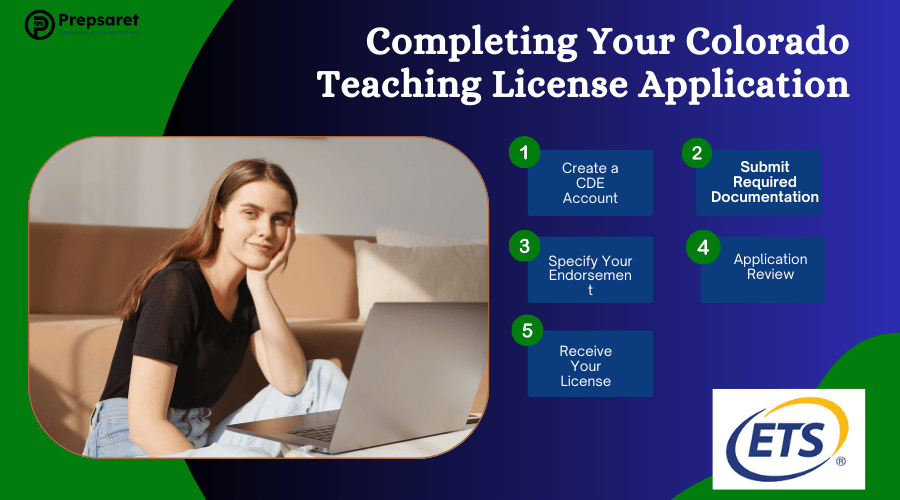
Once you’ve completed your teacher preparation program (or enrolled in an alternative pathway) and passed your Praxis exams, you’re ready to apply for your Colorado teaching license.
Initial Teacher License Application Process
Step 1: Create a CDE Account
Access the Colorado Department of Education educator licensure system online. Create your account and begin your application for an initial teacher license.
Step 2: Submit Required Documentation
Your application will require:
- Official transcripts from all post-secondary institutions attended
- Praxis score reports sent directly from ETS to CDE
- Program completion verification from your teacher preparation program (for traditional pathway candidates)
- Employment verification from your sponsoring district (for alternative pathway candidates)
- Background check clearance through the Colorado Bureau of Investigation (CBI) and FBI
- Application fee (currently around $100-$150; verify current fee)
Step 3: Specify Your Endorsement
Indicate that you’re applying for an English Language Arts endorsement. Specify your grade range:
- Middle School English (grades 5-9)
- Secondary English (grades 7-12)
Most candidates pursuing secondary English certification aim for the 7-12 endorsement, which provides maximum flexibility in job opportunities.
Step 4: Application Review
The Colorado Department of Education will review your application to ensure all requirements are met. This process typically takes 4-8 weeks. You can check your application status through the online portal.
Step 5: Receive Your License
Upon approval, you’ll receive your initial teacher license, valid for three years. Your license authorizes you to teach English Language Arts in Colorado public schools within your endorsed grade range.
Maintaining and Advancing Your License
Your initial license is just the beginning of your professional journey. Colorado requires ongoing professional development and license renewal.
Professional Teacher License:
After successfully teaching for three years on an initial license, you can apply for a professional teacher license by demonstrating:
- Three years of satisfactory teaching performance
- Completion of an induction program (usually provided by your employing district)
- Evidence of professional growth and development
The professional license is valid for five years and renewable indefinitely with ongoing professional development.
Advanced Endorsements:
Consider pursuing additional endorsements to expand your career opportunities:
- Reading Teacher or Reading Specialist endorsement
- ESL (English as a Second Language) endorsement
- Gifted and Talented endorsement
- Special Education endorsement
Additional endorsements require supplementary coursework and/or Praxis exams but significantly increase your value to school districts and provide professional growth opportunities.
Finding English Teaching Jobs in Colorado
With your license in hand, you’re ready to begin your job search. Colorado school districts actively recruit qualified English teachers, particularly those willing to work in high-need schools or rural areas.
Job Search Strategies
1. Colorado BOCES and District Websites
Most Colorado school districts post openings on their websites. Major districts include:
- Denver Public Schools
- Jefferson County Public Schools
- Douglas County School District
- Cherry Creek Schools
- Colorado Springs School District 11
- Adams 12 Five Star Schools
- Poudre School District (Fort Collins)
- Boulder Valley School District
Check these sites regularly, as positions are posted throughout the year, with peak hiring in spring for fall positions.
2. Job Boards and Recruitment Events
- Colorado BOCES Job Boards: Regional educational service agencies that post openings across multiple districts
- Teacher recruitment fairs: Attend state and regional job fairs where you can meet multiple districts in one location
- Online platforms: Education-specific job boards feature Colorado openings
3. Network Professionally
- Connect with teachers and administrators during your student teaching placement
- Join professional organizations like the Colorado Council Teachers of English
- Attend educational conferences and professional development events
- Leverage your teacher preparation program’s career services and alumni network
4. Consider Charter Schools and Private Schools
While your Colorado teaching license is required for public schools, charter schools (which are public) and some private schools also hire English teachers. Each has different application processes and may offer unique teaching environments.
Preparing Your Application Materials
Strong application materials make you stand out in a competitive field:
Resume/CV:
- Highlight your content knowledge in English Language Arts
- Emphasize student teaching or relevant experience
- Include any special skills (technology integration, differentiation strategies, etc.)
- Showcase any honors, awards, or leadership experiences
Cover Letter:
- Tailor each letter to the specific school and position
- Demonstrate knowledge of the school’s mission and student population
- Highlight your teaching philosophy and approach to English instruction
- Show enthusiasm for contributing to the school community
Teaching Portfolio:
- Include sample lesson plans demonstrating your instructional design skills
- Provide examples of student work (with permission and anonymized)
- Document your unit planning and curriculum development
- Include letters of recommendation from cooperating teachers or professors
Teaching Philosophy Statement:
- Articulate your beliefs about teaching and learning
- Explain your approach to English Language Arts instruction
- Discuss how you’ll meet diverse student needs
- Connect your philosophy to current educational research and best practices
Interview Preparation
Teaching interviews typically include both traditional questions and demonstration lessons.
Common Interview Questions:
- Why do you want to teach English?
- How do you differentiate instruction for diverse learners?
- What is your approach to teaching writing?
- How do you incorporate diverse texts and perspectives in your curriculum?
- How do you assess student learning beyond traditional tests?
- How would you handle [specific classroom management scenario]?
- What do you know about our school and student population?
Demonstration Lesson:
Many districts require candidates to teach a sample lesson. Prepare by:
- Understanding the audience (grade level, class size)
- Creating an engaging, standards-aligned lesson
- Demonstrating effective instructional strategies
- Including formative assessment
- Managing time effectively
- Showing your personality and teaching style
Practice your demonstration lesson multiple times before the interview. Solicit feedback from mentors or peers.
Related post: State-by-State Praxis Test Requirements for Teacher Certification
Continuing Your Professional Development
Teaching is a career of continuous learning. Colorado expects and supports ongoing professional development for educators.
Professional Learning Opportunities
Content-Area Organizations:
- Colorado Council Teachers of English (CCTE): State affiliate of NCTE, offering conferences, publications, and networking
- National Council of Teachers of English (NCTE): National organization with extensive resources for English teachers
- Local literacy councils and writing projects: Provide professional development in reading and writing instruction
Professional Development Focus Areas:
- Culturally responsive teaching practices
- Technology integration in English classrooms
- Differentiated instruction strategies
- Supporting English Language Learners in content areas
- Trauma-informed teaching practices
- Social-emotional learning integration
- Advanced Placement or International Baccalaureate training (if teaching these courses)
Advanced Degrees:
Many English teachers pursue master’s degrees to deepen their expertise and increase their earning potential. Options include:
- Master of Arts in English or English Education
- Master of Arts in Teaching (MAT)
- Master of Education (M.Ed.) with English focus
- Literacy or Reading Specialist degrees
Colorado’s salary schedules typically offer significant increases for teachers with advanced degrees.
Staying Current in English Education
The field of English education continually evolves. Stay current by:
- Reading professional journals (English Journal, Journal of Adolescent & Adult Literacy)
- Following education blogs and podcasts
- Participating in Twitter chats and online professional learning communities
- Attending local, state, and national conferences
- Collaborating with colleagues in professional learning communities
- Exploring new young adult literature and diverse texts
- Integrating emerging technologies thoughtfully
Your commitment to professional growth benefits both your students and your career satisfaction.
Understanding the Colorado Education Context
To be effective in Colorado schools, understand the state’s educational landscape and current initiatives.
Colorado Academic Standards
Colorado has adopted comprehensive academic standards for English Language Arts across all grade levels. These standards emphasize:
- Reading complex literary and informational texts
- Writing across genres and for various purposes
- Speaking and listening skills for collaboration and presentation
- Language conventions and vocabulary development
Familiarize yourself with Colorado’s ELA standards for your grade levels. Your instruction should align with these standards while allowing for creativity and responsiveness to student needs.
Student Populations in Colorado
Colorado serves diverse student populations with varying needs:
- English Language Learners (ELLs): Significant populations in many districts require culturally and linguistically responsive instruction
- Students with disabilities: Inclusive classrooms mean you’ll differentiate for various learning needs
- Gifted and talented students: Advanced learners need appropriate challenge and enrichment
- Students experiencing poverty: Understanding trauma-informed practices and providing equitable access to rigorous curriculum
- Rural students: Schools in mountain and plains communities may have unique needs and smaller class sizes
Preparation for teaching all students effectively is essential for success in Colorado classrooms.
Current Educational Priorities
Colorado education focuses on several key priorities:
- Literacy development: Emphasis on reading and writing across content areas
- Equity and access: Ensuring all students receive high-quality education regardless of background
- Social-emotional learning: Supporting the whole child, not just academic development
- College and career readiness: Preparing students for post-secondary success
- Assessment and accountability: Measuring growth and proficiency through various assessments
Understanding these priorities helps you align your teaching with state and district goals.
Tips for Success as a New English Teacher in Colorado
Starting your teaching career is exciting and challenging. Here are essential tips for thriving:
Build Strong Relationships
Your success depends largely on relationships:
- With students: Learn their names quickly, show genuine interest, build trust and respect
- With colleagues: Collaborate, ask for help, share resources, be a team player
- With administrators: Communicate professionally, be receptive to feedback, demonstrate reliability
- With families: Establish positive communication early, share student successes, partner in supporting students
Teaching is a relational profession. Invest in building positive relationships from day one.
Establish Effective Classroom Management
Clear expectations and consistent routines create the foundation for learning:
- Establish clear behavioral expectations and academic procedures
- Teach and reinforce routines explicitly
- Be consistent with consequences and follow-through
- Build a positive classroom culture where mistakes are learning opportunities
- Use proximity, non-verbal cues, and positive reinforcement
- Address issues promptly and privately when possible
Effective classroom management allows you to focus on instruction rather than constantly addressing disruptions.
Plan Purposefully
Strong planning leads to strong instruction:
- Begin with clear learning objectives aligned to standards
- Design engaging activities that promote active learning
- Incorporate diverse texts and perspectives
- Plan for differentiation from the start
- Include formative assessment throughout lessons
- Prepare more material than you think you’ll need
- Have backup plans for technology failures or unexpected disruptions
While you’ll improve your planning over time, thorough preparation is especially crucial in your first years.
Prioritize Self-Care
Teaching is demanding work. Protect your wellbeing:
- Set boundaries around work time (don’t grade papers until midnight every night)
- Develop efficient systems for grading and feedback
- Build in time for activities you enjoy outside teaching
- Connect with other teachers for support and perspective
- Ask for help when you need it—teaching shouldn’t be isolating
- Celebrate small victories and student growth
- Remember why you chose teaching when challenges arise
Sustainable teaching requires taking care of yourself so you can effectively care for students.
Embrace the Learning Curve
Every teacher, no matter how talented, experiences challenges early in their career:
- Give yourself grace for imperfect lessons
- Learn from mistakes rather than dwelling on them
- Seek feedback from mentors and administrators
- Reflect on what worked and what didn’t
- Continuously refine your practice
- Remember that expertise develops over time
Your first year won’t be your best year of teaching, and that’s perfectly normal and expected.
Related post: Free Praxis Practice Test: Praxis Core Questions & Answers
FAQs
How do I obtain my Colorado teaching license?
To obtain your Colorado teaching license, you must complete a teacher preparation program, pass the Praxis exams, and meet other state requirements.
What are the English teacher certification requirements in Colorado?
Requirements include passing the Praxis II exam, completing a teacher preparation program, and undergoing a background check.
Can I teach without a degree in education?
Yes, Colorado offers alternative teacher certification routes for individuals who have a bachelor's degree in a non-education field.
What is the role of the Colorado Department of Education?
The Colorado Department of Education oversees teacher certification, licensure, and educational standards within the state.
Conclusion
Learning how to become an English teacher in Colorado may feel overwhelming at first, but when broken into clear steps, it’s an achievable and rewarding path. By completing an approved preparation program, meeting student teaching requirements, and passing the required Praxis English exam, you position yourself for a meaningful career teaching English in Colorado schools.
With focused preparation, smart study strategies, and the right mindset, you can walk into your Praxis exam confident—and move one step closer to your teaching career.