

Key Points
- Pope Leo XIV warned U.S. students not to rely on artificial intelligence to complete their homework.
- Speaking via livestream to thousands at a national Catholic youth conference, he urged intentional technology use and stronger in-person relationships.
- The pope also encouraged young Catholics to deepen prayer life, community involvement, and ethical discernment around digital tools.
Guidance for a Digital Generation
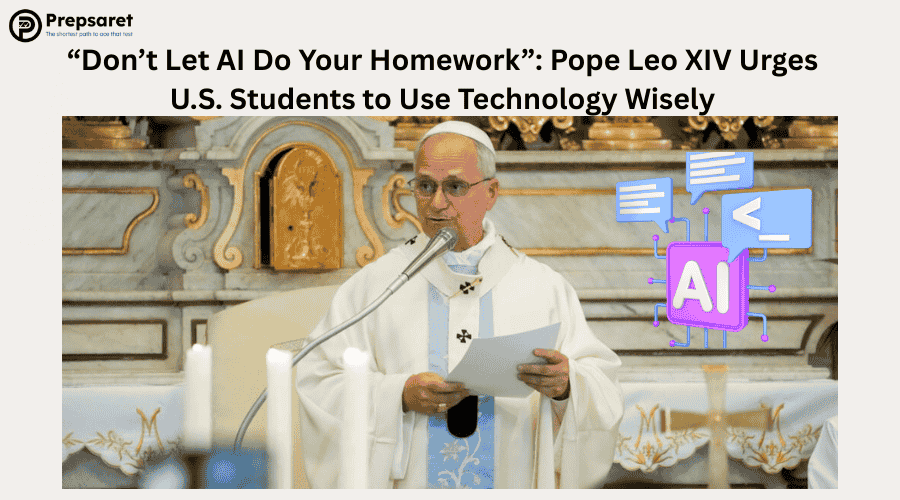
Pope Leo XIV advised thousands of students to be thoughtful and disciplined with their use of technology, warning them not to let artificial intelligence take over essential parts of their learning—especially their homework.
Speaking via livestream from the Vatican to more than 15,000 youth gathered at the National Catholic Youth Conference in Indianapolis, the first U.S.-born pope described AI as “one of the defining features of our time,” but stressed that it must serve human growth, not replace it.
During the nearly hour-long session, Leo answered preselected questions from five high school students representing dioceses across the United States. He reflected on faith, friendships, digital habits, and even shared lighthearted personal details—like only wearing white socks and choosing a different Wordle starting word each day.
While he acknowledged the benefits of technology, such as staying connected over long distances and having access to prayer tools and Scripture resources, he cautioned against letting screens displace human interaction. Simple gestures—a smile, a handshake, a hug—are irreplaceable, he said, reminding students that faith must be lived in real communities, not just online spaces.
The pope encouraged young people to follow the example of St. Carlo Acutis, who used digital platforms to share the Gospel but kept firm limits on his time online. “Be intentional with your screen time,” Leo said. “Make sure technology serves your life and not the other way around.”
Ethics, Faith, and Responsible Technology Use
When asked specifically about AI tools like ChatGPT, Pope Leo drew a clear line: they can assist learning, but should never substitute for a student’s own thinking and effort. He reiterated the need for ongoing ethical reflection on artificial intelligence, echoing remarks he made earlier in the year calling for responsible oversight of emerging technologies.
Beyond digital concerns, Leo also urged students to cultivate prayer, participate actively in their parishes, and seek authentic friendships. He referenced his admiration for St. Augustine, noting that the saint searched widely for happiness but found true fulfillment only after opening his heart to God.
The pope briefly touched on political themes when discussing the broader mission of Christians, saying Jesus calls believers to “build bridges instead of walls”—a familiar echo of criticisms of anti-immigration policies voiced by Pope Francis. But he warned young people not to let partisan categories define the way they think about faith.
As his papacy enters its sixth month, Pope Leo’s conversation with American youth marked a significant moment in his outreach to younger generations. His message blended humor, pastoral warmth, and caution about the digital realities shaping modern life—offering students both freedom to use technology and a firm reminder to remain grounded in human relationships, faith, and responsibility.